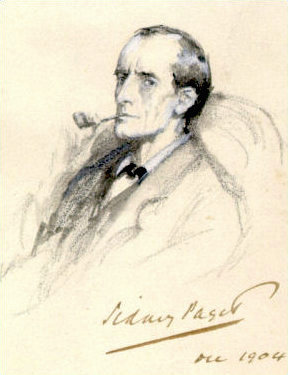
The haunting, enigmatic strains of the Sherlock Holmes theme have captivated audiences for decades, instantly transporting listeners to foggy London streets and the thrilling world of deduction. For violinists, mastering this iconic melody offers not just a technical challenge but a chance to embody the spirit of the world's greatest consulting detective. If you're eager to unlock the secrets of the BBC Sherlock theme on your instrument, understanding the foundational key of A minor is your first crucial step. This comprehensive guide will equip you with the knowledge and practice strategies to bring the authentic sound of the Sherlock Holmes violin to life.
Unlocking the Sherlock Holmes Theme: Why A Minor Matters
At the heart of many memorable melodies lies a well-chosen key, and for the Sherlock Holmes theme, A Minor provides the perfect canvas. The BBC adaptation, in particular, leverages this key to evoke a sense of mystery, introspection, and sometimes, a touch of melancholy – emotions intricately woven into Holmes's character and the stories he inhabits. A minor, often associated with a reflective or pensive mood, allows for a rich interplay of dark and light, tension and resolution, which perfectly mirrors the twists and turns of a Holmesian investigation.
When you encounter an arrangement of the Sherlock Holmes theme for violin, it's highly likely to be in A minor. This isn't just a random choice; it's a deliberate musical decision that contributes significantly to the theme's overall impact. For you, the aspiring Holmesian violinist, this means that a deep familiarity with the A minor scale and its associated arpeggios is not merely helpful, but absolutely essential. Think of it as Holmes's knowledge of the London streets – without it, navigation is haphazard and inefficient. With a solid grasp of A minor, your fingers will find their way around the fretboard with greater ease, allowing you to focus on the expressive nuances that truly make the theme sing.
Practicing in this key prepares your hand for the specific intervals and finger patterns you’ll encounter in the theme itself, building muscle memory and improving your intonation. It's the musical bedrock upon which your interpretation will stand, ensuring that every note you play contributes to the authentic, brooding atmosphere of the Sherlock Holmes violin sound.
Your Practice Blueprint: Mastering A Minor for the Sherlock Holmes Violin Theme
To truly master the Sherlock Holmes theme, a systematic approach to A minor is indispensable. Beyond simply playing the scale up and down, here’s a comprehensive blueprint for effective practice:
1. Scales and Arpeggios – The Foundation:
- A Minor Natural Scale: Begin with the natural minor (A-B-C-D-E-F-G-A). Focus on even tone, consistent bowing, and perfect intonation. Practice slowly with a drone or tuner.
- A Minor Harmonic Scale: Introduce the G# (A-B-C-D-E-F-G#-A). This raised seventh creates a characteristic "leading tone" pull to the tonic, adding a dramatic, often mysterious, quality crucial for the theme. Practice ascending and descending.
- A Minor Melodic Scale: For advanced practice, explore the melodic minor (ascending: A-B-C-D-E-F#-G#-A; descending: A-G-F-E-D-C-B-A). While less directly relevant for the core theme, it enhances overall fingerboard fluency in the key.
- A Minor Arpeggios: Practice the tonic arpeggio (A-C-E-A) and dominant arpeggio (E-G#-B-E). These outline the harmonic framework and are vital for navigating chordal passages within the theme.
2. Bowing and Rhythmic Variations:
- Long, Sustained Bows: Practice scales and arpeggios with long, smooth bows (legato) to develop a rich, even tone.
- Detached Bowing: Introduce detached strokes (detache) for clarity and definition, essential for articulating faster passages in the theme.
- Slurred Notes: Experiment with slurring groups of notes (e.g., two, four, or eight notes per bow) to improve bow control and fluency.
- Rhythmic Patterns: Vary your scale practice by incorporating different rhythms – dotted notes, triplets, sixteenth notes. This makes your fingers and bow more adaptable.
3. Intonation Drills:
- Slow Practice: Play scales and arpeggios excruciatingly slowly, listening intently to each note. Use a tuner or an online drone to ensure accuracy.
- Finger Placement: Pay attention to the precise placement of your fingers. Small adjustments make a huge difference in A minor, especially with the G# in the harmonic scale.
- Double Stops (Advanced): For experienced players, practice A minor in double stops (e.g., open A with third finger C on G string, or first finger A on G string with fourth finger C on D string) to further refine your ear for harmony.
By dedicating time to these foundational exercises, you'll not only prepare your hands for the Sherlock Holmes theme but also elevate your overall violin playing. This methodical approach mirrors Holmes's own rigorous investigative techniques, ensuring that no detail is overlooked.
Beyond the Notes: The Art of Holmes's Violin Playing
Sherlock Holmes wasn't merely a violinist; he was a master of his craft, described by Dr. Watson as possessing a skill "very remarkable, but as eccentric as all his other accomplishments." To truly channel the spirit of the Sherlock Holmes theme, it's vital to understand the detective's profound connection to his instrument.
Holmes's violin was not just a hobby; it was an extension of his intellect, a tool for both relaxation and intense concentration. Dr. Watson recounts how Holmes would play "pieces, and difficult pieces," including Mendelssohn’s Lieder, often at Watson's request. This suggests a performer capable of both technical prowess and emotional depth. His love for opera further highlights his appreciation for dramatic storytelling and complex musical narratives, elements that subtly infuse the character of the Sherlock Holmes violin theme itself.
Perhaps one of the most fascinating aspects of Holmes's musical life is his prized possession: a genuine Stradivarius violin. Acquired for a mere 45 shillings at a pawnbroker’s shop in London's Tottenham Court Road, this instrument was worth at least 500 guineas – a testament to Holmes's astute eye for value, even in unexpected places. The Stradivarius, renowned for its unparalleled tone and projection, speaks volumes about Holmes’s dedication to quality and his desire for the best tools in his "arsenal." You can delve deeper into this incredible story and more by reading Discover Sherlock Holmes's Violin: Stradivarius, Skill & Secrets.
Holmes's admiration for virtuosity is also well-documented. He shared "anecdote after anecdote" about the legendary violin virtuoso Paganini and was captivated by Wilhelmine "Wilma" Norman-Neruda, known as 'the female Paganini,' whose concert he attended with fervent enthusiasm. This connection to the great violinists of his time provides a glimpse into the musical standards Holmes himself strived for. Even his clever deception in The Adventure of the Mazarin Stone, where he fooled enemies with a gramophone recording of Offenbach’s Barcarolle, underscores his tactical use of music. Explore these intriguing facets of his musical world in Sherlock Holmes's Violin: Paganini, Opera, and Musical Deception.
When you approach the Sherlock Holmes theme, don't just play the notes. Think about Holmes's character: his intensity, his moments of contemplative solitude, his sharp intelligence. Let these qualities inform your bowing, your dynamics, and your phrasing, transforming your performance from a mere rendition into a truly evocative experience.
Finding Your Way: Navigating Sheet Music and Arrangements
With its widespread popularity, finding suitable sheet music for the Sherlock Holmes theme might seem straightforward, but a few considerations are in order. Due to copyright restrictions, official arrangements of the BBC theme may not always be available for free. However, this doesn't diminish your options; it simply encourages a more resourceful approach.
1. Official vs. Fan Arrangements:
- Licensed Sheet Music: The most accurate and high-quality arrangements are typically licensed and available for purchase from reputable music retailers or directly from the composer/publisher. These are often worth the investment for their fidelity to the original.
- Online Communities: Websites like MuseScore.com host countless fan-made arrangements. While some are excellent, quality can vary. Always cross-reference with recordings to ensure accuracy.
- Tutorials with Downloadable Content: Many YouTube tutorials offer their own arrangements, sometimes available for purchase or as part of a subscription.
2. Adapting from Other Instruments:
If you have access to a piano or full orchestral score of the theme, you can often adapt the melody line for the violin. This requires a good understanding of music theory and the violin's range, but it's an excellent exercise in musical independence.
3. Learning by Ear:
For the adventurous and those with a well-developed ear, learning the theme directly from a recording is a fantastic way to internalize the melody and develop your musical intuition. Start with small phrases, hum them, and then find them on your violin. This method forces you to listen critically to intonation, rhythm, and phrasing, much like Holmes discerning crucial details from seemingly trivial observations.
4. Evaluating Arrangements:
- Key Signature: Ensure the arrangement is in A minor (or a closely related key if you're adapting).
- Playability: Is it within your current technical grasp, or does it offer a reasonable challenge?
- Accuracy: Does it sound like the theme you know and love? Compare it to a reference recording.
- Markings: Look for clear bowing suggestions, fingerings, dynamics, and tempo indications.
Remember, the goal is to find an arrangement that allows you to engage with the music effectively. Don't be discouraged if the exact arrangement you seek isn't free; consider it an investment in your musical journey.
Embracing the Mystery: Performance Tips for the Sherlock Holmes Violinist
Once you’ve diligently practiced your A minor scales and familiarized yourself with the theme’s notes, the real artistry begins. Performing the Sherlock Holmes theme on your violin is about more than technical accuracy; it's about conveying the depth, intelligence, and underlying tension that define the character and his world.
Here are some tips to infuse your performance with authentic Holmesian flair:
- Phrasing for Narrative: Think of the theme as a story. Each phrase should have a clear beginning, middle, and end. Use subtle dynamic shifts and slight pauses to create a sense of unfolding narrative, much like Holmes presenting his deductions. The melody often features moments of anticipation and resolution; emphasize these with careful bowing and articulation.
- Dynamics and Expression: The Sherlock Holmes theme is rarely played at a monolithic volume. Explore a wide dynamic range. Pianissimo (very soft) sections can evoke quiet contemplation or creeping danger, while a sudden forte (loud) can signify a moment of revelation or urgency. Use crescendos and diminuendos to build and release tension.
- Bowing Nuances: Your bow is your voice. Experiment with different bowing techniques to achieve various effects. A smooth, lyrical legato can convey reflection, while a crisp, slightly detached stroke might suggest Holmes's sharp intellect or a decisive action. Play with bow speed and pressure to achieve different tonal colors. A little vibrato can add warmth and expressiveness, but use it judiciously to maintain the theme's inherent gravity.
- Tempo and Rhythm: While maintaining a steady tempo is important, subtle rubato (flexibility in tempo) can add expressiveness, especially in more lyrical sections. However, be careful not to distort the underlying pulse. Pay close attention to the rhythmic accuracy, particularly with dotted notes and syncopation, which contribute to the theme's distinctive character.
- Connect with the Character: Before you play, take a moment to imagine Holmes in his study, contemplating a difficult case, or venturing into the fog-laden streets. How would he feel? How would that translate into the music? Allow the analytical, observant, and sometimes melancholic aspects of his personality to guide your interpretation.
- Embrace the "Eccentricity": Remember Watson's description of Holmes's playing as "eccentric." This doesn't mean sloppy, but rather unique and perhaps unconventional in its expressiveness. Don't be afraid to bring your own personality and understanding of the character to the performance, within the bounds of good taste and musicality.
Playing the Sherlock Holmes theme is an immersive experience. It's an opportunity to not only refine your violin technique but also to delve into character interpretation, bringing a beloved figure to life through the power of music.
Mastering the Sherlock Holmes theme on the violin is a rewarding journey that combines technical precision with artistic interpretation. By diligently practicing your A minor scales and arpeggios, understanding the rich musical world of Sherlock Holmes, and applying thoughtful performance techniques, you can truly capture the essence of this iconic melody. Embrace the challenge, channel your inner detective, and let the mysterious, captivating sounds of the Sherlock Holmes violin resonate through your playing.