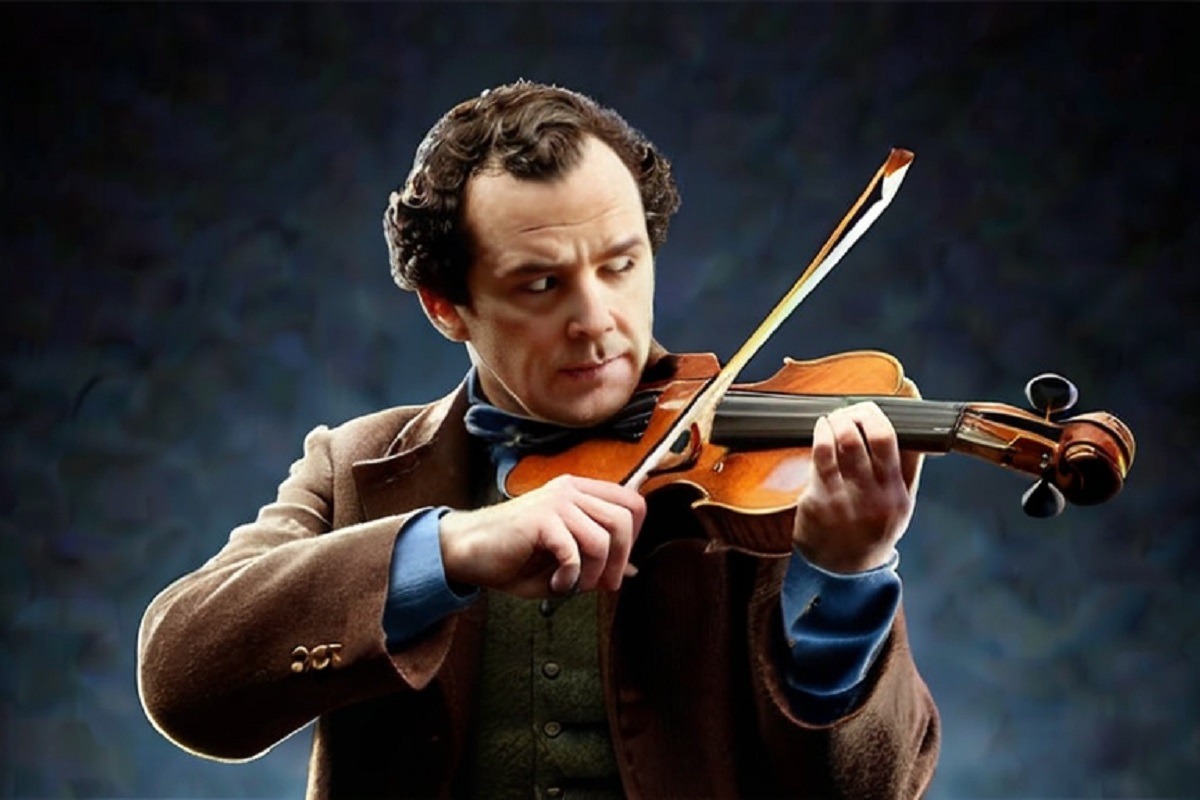
Discover Sherlock Holmes's Violin: Stradivarius, Skill & Secrets
The image of Sherlock Holmes is indelibly etched in popular culture: deerstalker hat, magnifying glass, and often, a violin tucked under his chin. Far from being a mere prop, the violin is a deeply intrinsic element of Holmes's character, a window into his complex mind, and a tool in his unparalleled deductive process. It is a source of solace, a mental exercise, and occasionally, a brilliant instrument of deception. But what do we really know about the legendary detective's musical companion? From its humble acquisition to its role in his extraordinary life, the **Sherlock Holmes violin** holds as many secrets as the cases he solved.
The Stradivarius: An Unlikely Acquisition for the World's Greatest Detective
Perhaps the most fascinating detail surrounding the **Sherlock Holmes violin** is its pedigree: it was a genuine Stradivarius. For those unfamiliar with the world of classical instruments, a Stradivarius is the zenith of violin craftsmanship, revered for its unparalleled sound quality and historical significance. Antonio Stradivari, the master luthier, created these instruments in 17th and 18th century Cremona, Italy, and today they command prices in the millions.
Yet, Holmes acquired his for a pittance. As Dr. Watson recounts, the detective purchased his prized Stradivarius for a mere 45 shillings from a pawnbroker's shop on London's bustling Tottenham Court Road. At the time, this instrument was estimated to be worth at least 500 guineas – an astonishing discrepancy that highlights Holmes's keen eye for value and his ability to see beyond surface appearances. This purchase isn't just a quirky detail; it's a testament to Holmes's character. He wasn't interested in the glitz of a high-priced auction; he found value where others overlooked it, much like he found crucial clues in seemingly insignificant details of a crime scene. Owning such a magnificent instrument speaks volumes about his appreciation for the finer things in life, even if his methods of acquisition were decidedly unconventional. It underscores his blend of high culture and street smarts, a true reflection of the multifaceted detective.
More Than Just a Hobby: Holmes's Proficient and Eccentric Skill
While Holmes's focus was undeniably on crime, his violin playing was far from amateur. Dr. Watson, a man not prone to hyperbole, described his skill as "very remarkable, but as eccentric as all his other accomplishments." This observation perfectly encapsulates Holmes's approach to everything he did. He could play "difficult pieces" and, at Watson's request, performed Mendelssohn’s Lieder and other favorites, demonstrating a command of classical repertoire.
For Holmes, the violin served multiple purposes beyond mere entertainment. It was an intellectual exercise, a mental palette cleanser, and a crucial tool for stimulating his formidable mind. When deep in thought, grappling with a particularly perplexing case, he would often pick up his violin, improvising wild, discordant melodies or playing soaring classical pieces. This wasn't aimless fiddling; it was his unique method of processing information, of allowing his subconscious to work through complex problems. When boredom threatened to overwhelm him between cases – a state he found utterly intolerable – the violin was his immediate refuge, a means to channel his restless energy into a constructive, albeit sometimes cacophonous, outlet. His musical passion also provided a powerful emotional release, a counterpoint to the logical rigor of his daily work, making the **Sherlock Holmes violin** a true extension of his inner world.
A Maestro of Deception: The Violin as a Tool in Detection
Sherlock Holmes was not just a master of deduction; he was also a master of deception and theatricality when the situation demanded it. In his hands, the violin could become more than an instrument of music; it could be a strategic tool in his elaborate investigations. One memorable instance occurred in "The Adventure of the Mazarin Stone." Here, Holmes cunningly fooled his enemies into believing he was playing the enchanting Barcarolle from Offenbach's The Tales of Hoffman on his violin. In reality, he was merely miming along to a gramophone recording, using the "music" as a distraction while he orchestrated a crucial part of his plan.
This ingenious ruse perfectly illustrates Holmes's capacity for strategic thinking and his flair for the dramatic. The violin, in this context, was a prop in a meticulously staged performance designed to ensnare his adversaries. It highlights his willingness to employ any means necessary, however unconventional, to achieve justice. This blend of artistry and deception makes the **Sherlock Holmes violin** an iconic symbol of his multifaceted genius. For more insights into how Holmes wielded his musical prowess for strategic advantage, you might enjoy
Sherlock Holmes's Violin: Paganini, Opera, and Musical Deception.
The Musical Palette of Sherlock Holmes: Paganini, Opera, and Inspiration
Beyond his own playing, Holmes possessed a profound appreciation for classical music and its virtuosos. He was particularly captivated by Niccolò Paganini, the legendary 19th-century Italian violinist and composer whose technical brilliance and enigmatic stage presence earned him a reputation as both a genius and a supernatural figure. Holmes's admiration was such that, over a bottle of claret, he would regale Watson with "anecdote after anecdote" about Paganini's extraordinary virtuosity.
His tastes weren't limited to instrumentalists; Holmes also harbored a deep love for opera. He attended concerts, displaying an informed appreciation for both performers and composers. In "A Study in Scarlet," he attended a Hallé Orchestra concert specifically to hear the Austrian violinist Wilhelmine "Wilma" Norman-Neruda, whom he affectionately dubbed 'the female Paganini.' His enthusiastic pronouncement to Watson – "It was magnificent!" – reveals his genuine passion and critical eye for musical excellence. This refined appreciation for the arts, particularly classical music, paints a richer picture of Holmes, showing that his mind, while primarily focused on the logical and empirical, was also deeply sensitive to beauty and artistic mastery. His musical insights provide another layer to understanding the complex personality behind the world's most famous detective.
Practicing Like Holmes: Embracing the A Minor Scale
For aspiring violinists inspired by the legendary detective, emulating Holmes's dedication to his craft is a rewarding pursuit. Even if you don't possess a Stradivarius (yet!), the principles of disciplined practice are universal. The iconic "Sherlock Holmes Theme," particularly as arranged for the violin, often resonates with the detective's contemplative and intense nature. Many popular arrangements, including one notable version, are set in the key of A Minor.
If you're looking to play such arrangements, beginning with the fundamentals is always the wisest approach – a method Holmes himself would undoubtedly endorse. Practicing the A Minor scale and arpeggio thoroughly will not only build your technical proficiency but also deepen your understanding of the melody's structure and emotional core.
Here's a simple practice tip for your own **Sherlock Holmes violin** journey:
- Start Slow: Use a metronome and begin at a slow tempo, ensuring each note is clear and in tune.
- Focus on Tone: Pay attention to your bowing. Aim for a full, resonant sound on every note of the scale and arpeggio.
- Finger Placement: Ensure accurate finger placement for precise intonation. Utilize finger tapes if you're a beginner.
- Rhythm and Articulation: Practice different bowing patterns and rhythms to develop versatility.
- Consistency is Key: Dedicate a short, consistent amount of time each day to scales and arpeggios. Even 10-15 minutes can make a significant difference.
Just as Holmes meticulously observed details to solve cases, a violinist must meticulously practice scales and arpeggios to master their instrument. For a dedicated guide to tackling this key, explore
Master the Sherlock Holmes Theme: A Minor Violin Practice Guide.
Conclusion
The **Sherlock Holmes violin** is more than just a famous literary prop; it is a profound element of his character, revealing layers of his personality that extend far beyond his logical prowess. From his shrewd acquisition of a priceless Stradivarius for pennies to his eccentric yet masterful performances, and even its occasional use as a tool for brilliant deception, the violin is a constant companion. It provides solace, stimulates his intellect, and connects him to the grand tradition of classical music and its legendary figures like Paganini. For fans and aspiring musicians alike, the image of Holmes with his violin serves as a powerful reminder that even the most brilliant minds benefit from a creative outlet, a passionate pursuit that enriches the soul and, in his case, often aids in the pursuit of justice.